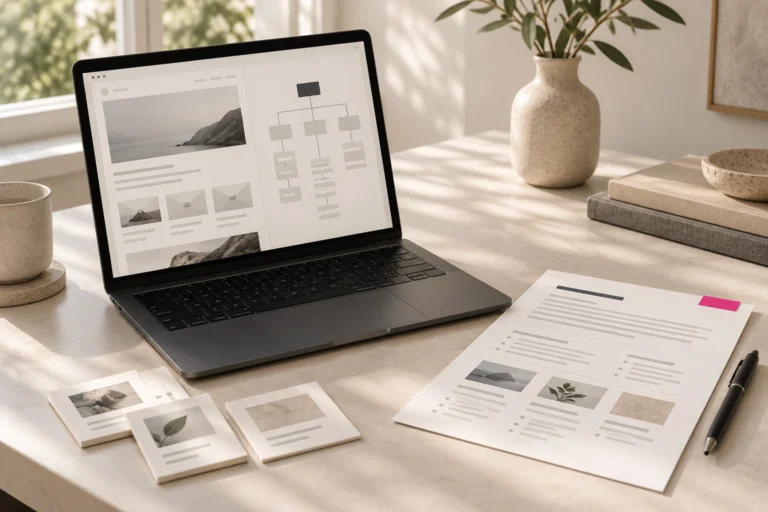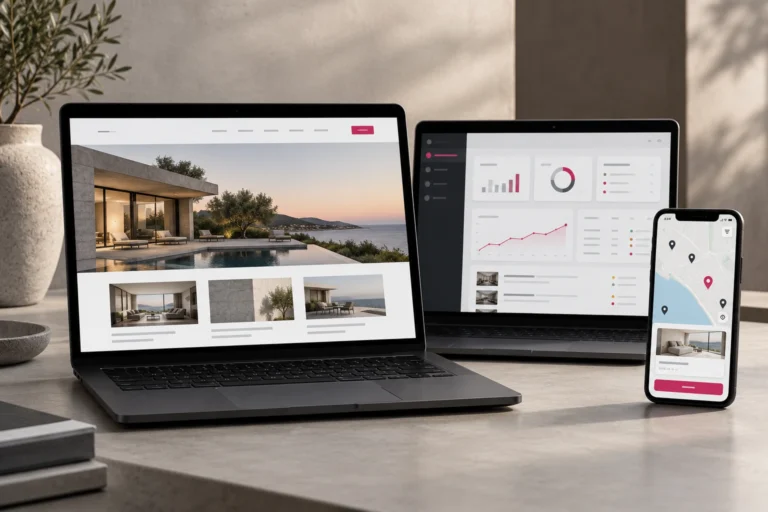


An MVP is an early version of a product that lets a team test whether it solves an important problem for real users. Planning one means deciding what must work in the first release, what can wait and what evidence will help the team choose its next step.
For a SaaS product, the MVP should support one meaningful user journey from beginning to end. It does not need every feature on the long-term roadmap. It does need enough clarity and reliability for users to complete the task the product promises to help with.
Begin with a specific user and problem
Avoid starting with a list of features. Describe one type of user, the situation they face and what they need to accomplish. A useful problem statement is concrete enough that someone can recognize it from their own work.
For example: “A communications team needs to review coverage across several media sources and prepare a clear update for decision-makers.” That describes a job and its context. “We need an AI platform” describes a possible solution, but leaves the user need unanswered.
Talk to people who experience the problem. Ask how they handle it now, where the process slows down and what happens when it goes wrong. Their answers can change the product scope before development begins.
Map one complete workflow
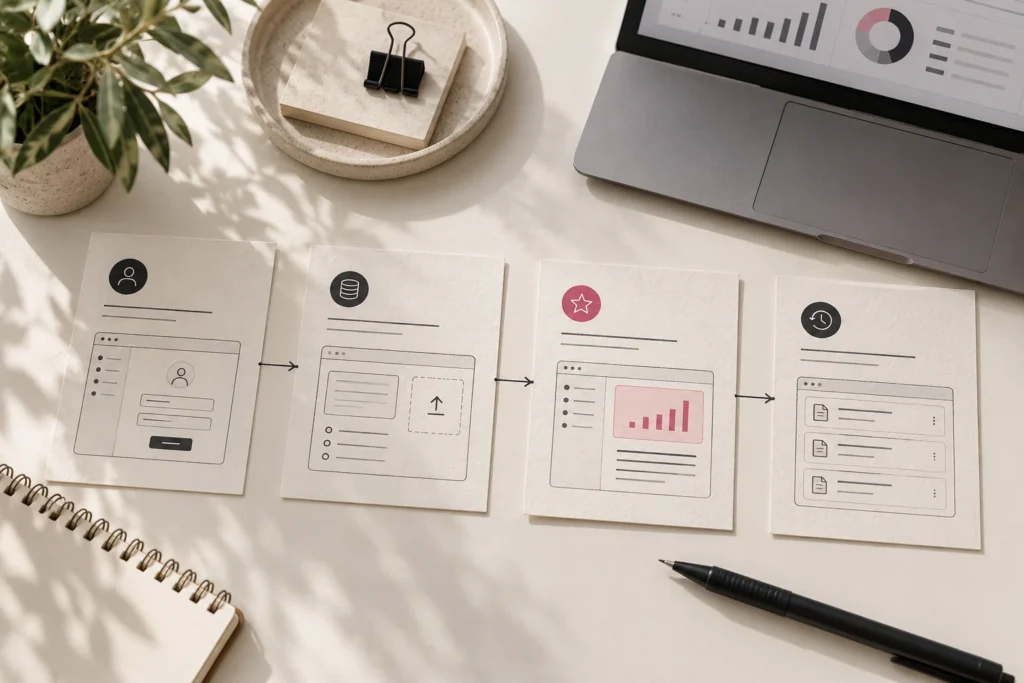
Choose the central task the first release should support. Map the steps a user takes, the information they need at each step and the point at which they receive value.
A SaaS product may require account creation, onboarding, a first action, a useful result and a way to return to that result. Include the less visible parts too: permissions, empty states, errors, notifications and what happens when the user has no data yet.
A workflow map is often more useful than a long feature list. It shows whether a proposed feature helps the main task or merely adds another screen.
Decide what belongs in the first release
For every proposed feature, ask:
- Does the user need it to complete the core workflow?
- Is it required for trust, privacy, billing or safe operation?
- Can the team test the main assumption without it?
- What is the cost of postponing it?
This creates three practical groups: needed for the first release, useful after learning from users, and outside the current product scope. Keep the first group focused.
Do not remove the work that makes the product dependable. If users cannot understand the interface, trust the data or recover from an error, a smaller feature set will not make the experience useful.
Decide what you want to learn
A first release should answer a small number of questions. For instance: can users complete the workflow without assistance? Do they understand the output? Does the product fit into how they already work?
Choose a way to observe each question. That might mean moderated user sessions, support requests, task completion, repeat use or conversations after a trial. Page views alone rarely explain whether the product solved the problem.
Keep the architecture proportionate
The technical foundation should support the product’s real requirements: user roles, data sensitivity, integrations, expected usage and future changes. It should also leave room to improve the product without making the first release unnecessarily complex.
Petalens, our media intelligence SaaS project, brings monitoring, analytics and reporting into a connected experience. It is a reminder that a product’s value often depends on how its parts work together. When planning an MVP, map the complete user task before deciding which screens or modules to build.
Common questions
How many features should an MVP have?
There is no useful fixed number. Include the capabilities needed to complete the core task and meet essential operational requirements. The workflow determines the scope.
Should an MVP feel polished?
It should be clear and reliable enough for users to understand the product and complete its main task. “Minimum” describes the scope, not permission to ignore usability or basic quality.
A focused MVP gives a team something concrete to learn from. Define the user, map the task, agree on what evidence matters and only then turn the plan into a build backlog. If you are shaping a SaaS idea, CREASTATION can help define its product scope before development.